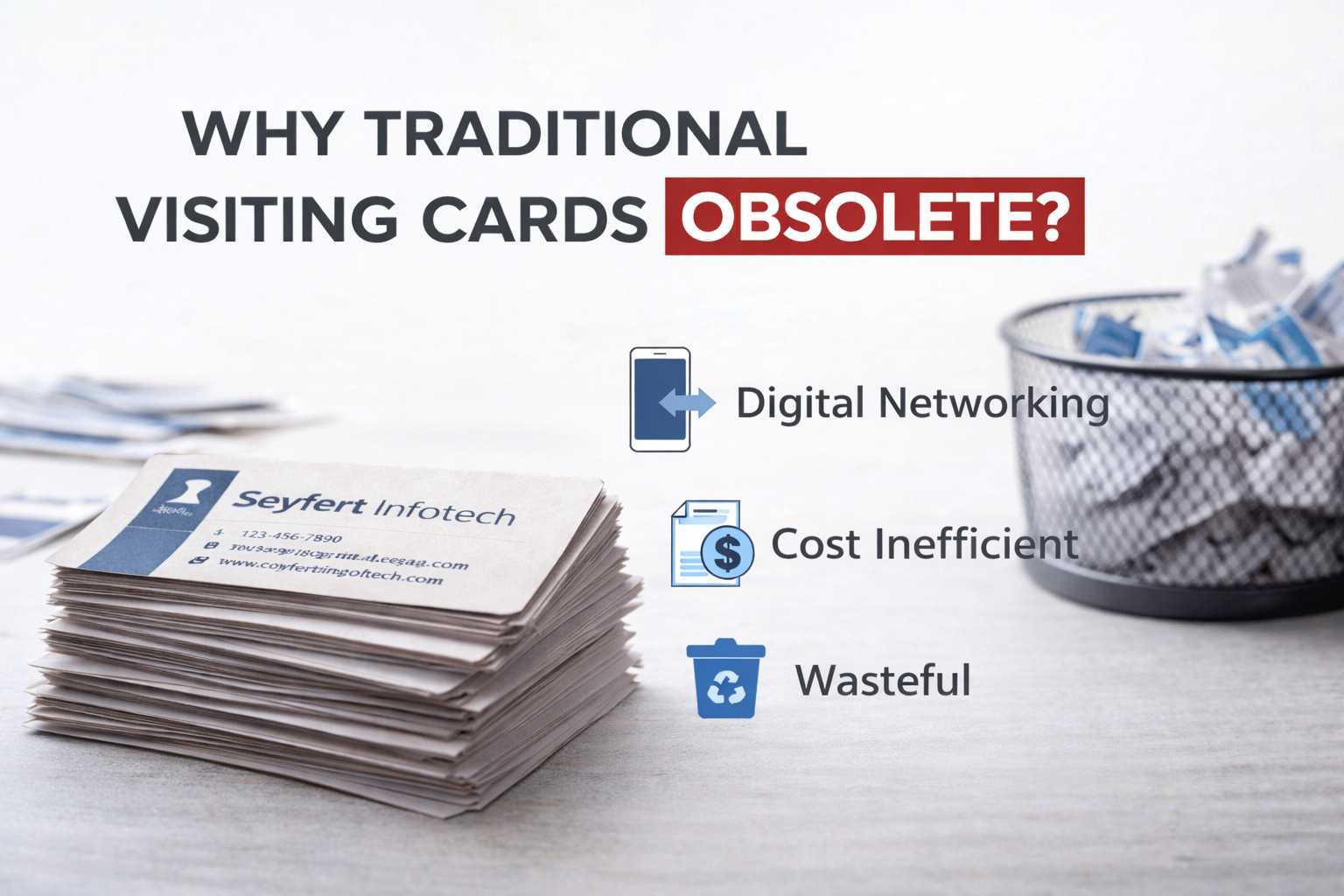
Traditional visiting cards are becoming outdated due to their limited information, high cost, and lack of flexibility. Digital solutions like VCRDS offer instant sharing, easy updates, and better engagement, making networking faster, smarter, and more efficient in today’s digital world.
Introduction
Traditional visiting cards have been a staple of professional networking for decades. They were once considered an essential tool for making connections and leaving a lasting impression. However, with the rapid growth of digital technology and changing business habits, traditional visiting cards are becoming increasingly obsolete. Below is a detailed look at why they are losing their relevance, explained with clear subtopics.
Limited Lifespan and Easy to Lose
One of the biggest drawbacks of traditional visiting cards is how easily they are lost or forgotten. After networking events or meetings, people often collect multiple cards, but only a few are actually used. Most end up misplaced, thrown away, or left unused in drawers.
Unlike digital contacts that are stored securely on devices, physical cards depend on how well someone manages them. This makes them unreliable for long-term professional connections.
Restricted Information Space
Traditional visiting cards can only hold limited information. Typically, they include basic details like name, phone number, email address, and company name. However, modern professionals need to share much more—such as social media profiles, websites, portfolios, and service links.
Because of space limitations, visiting cards fail to present a complete picture of a person or business. This reduces their effectiveness in today’s competitive market.
Manual Data Entry is Time-Consuming
When someone receives a physical card, they must manually enter the contact details into their phone or system. This process takes time and effort, and many people simply skip it.
Additionally, manual entry increases the chances of errors, such as saving incorrect numbers or email addresses. In contrast, digital sharing allows instant saving with just a tap or scan, making the process much more efficient.
High Printing and Maintenance Costs
Printing visiting cards is not a one-time expense. Whenever there is a change in contact details, job title, or company branding, new cards must be printed. This leads to recurring costs over time.
For small businesses and startups, these expenses can add up quickly. Compared to digital solutions, which require minimal investment and can be updated anytime, traditional cards are less cost-effective.
Not Environmentally Friendly
Environmental concerns are another major reason why traditional visiting cards are becoming obsolete. Paper production contributes to deforestation, and most printed cards eventually end up as waste.
As businesses and individuals move toward sustainable practices, the demand for eco-friendly alternatives is increasing. Digital visiting cards eliminate the need for paper, making them a greener and more responsible choice.
Lack of Flexibility and Updates
Once a visiting card is printed, the information on it cannot be changed. If there are updates to your phone number, email, or company details, the existing cards become outdated.
This lack of flexibility is a major disadvantage in a fast-changing business environment. Digital alternatives allow users to update their information instantly without any additional cost or effort.
No Interactivity or Engagement
Traditional visiting cards are static—they simply display information without offering any interaction. In today’s digital age, engagement plays a key role in building relationships.
Modern tools allow users to include clickable links, videos, social media profiles, and direct communication options. These interactive features make digital solutions far more engaging than printed cards.
No Tracking or Analytics
Another limitation of traditional visiting cards is the absence of tracking. There is no way to know how many people used your card, visited your website, or contacted you after receiving it.
In contrast, digital platforms provide valuable insights and analytics. Businesses can track engagement, measure performance, and improve their networking strategies based on real data.
Changing Networking Trends
The way people connect and communicate has changed significantly. Today, smartphones and digital platforms dominate professional interactions. People prefer quick, contactless, and efficient ways to share information.
Carrying physical cards is no longer necessary when digital options can do the job faster and more effectively. This shift in behavior is one of the key reasons for the decline of traditional visiting cards.
Rise of Digital Alternatives like VCRDS
Modern tools like VCRDS are revolutionizing how professionals exchange and manage their contact information. Instead of handing out a physical card, users can share a digital profile through a QR code or link.
These profiles can include comprehensive information such as phone numbers, emails, websites, social media links, and more—all in one place. They can also be updated anytime, ensuring that the information is always accurate.
Improved Professional Image
Using digital visiting cards creates a modern and professional impression. It shows that you are tech-savvy, innovative, and aligned with current trends.
In a competitive business environment, adopting modern tools like VCRDS can help you stand out and leave a lasting impression on clients and partners.
Conclusion
Traditional visiting cards are becoming obsolete due to their many limitations. They are easy to lose, provide limited information, require manual effort, and lack flexibility, interactivity, and sustainability.
As the world moves toward digital transformation, solutions like VCRDS offer a smarter and more efficient way to network. They provide convenience, cost savings, real-time updates, and better engagement—making them the future of professional communication.
In today’s fast-paced digital world, relying on traditional visiting cards is no longer practical. Adopting digital solutions is crucial to remain relevant, competitive, and well-connected in today’s fast-changing world.