Introduction
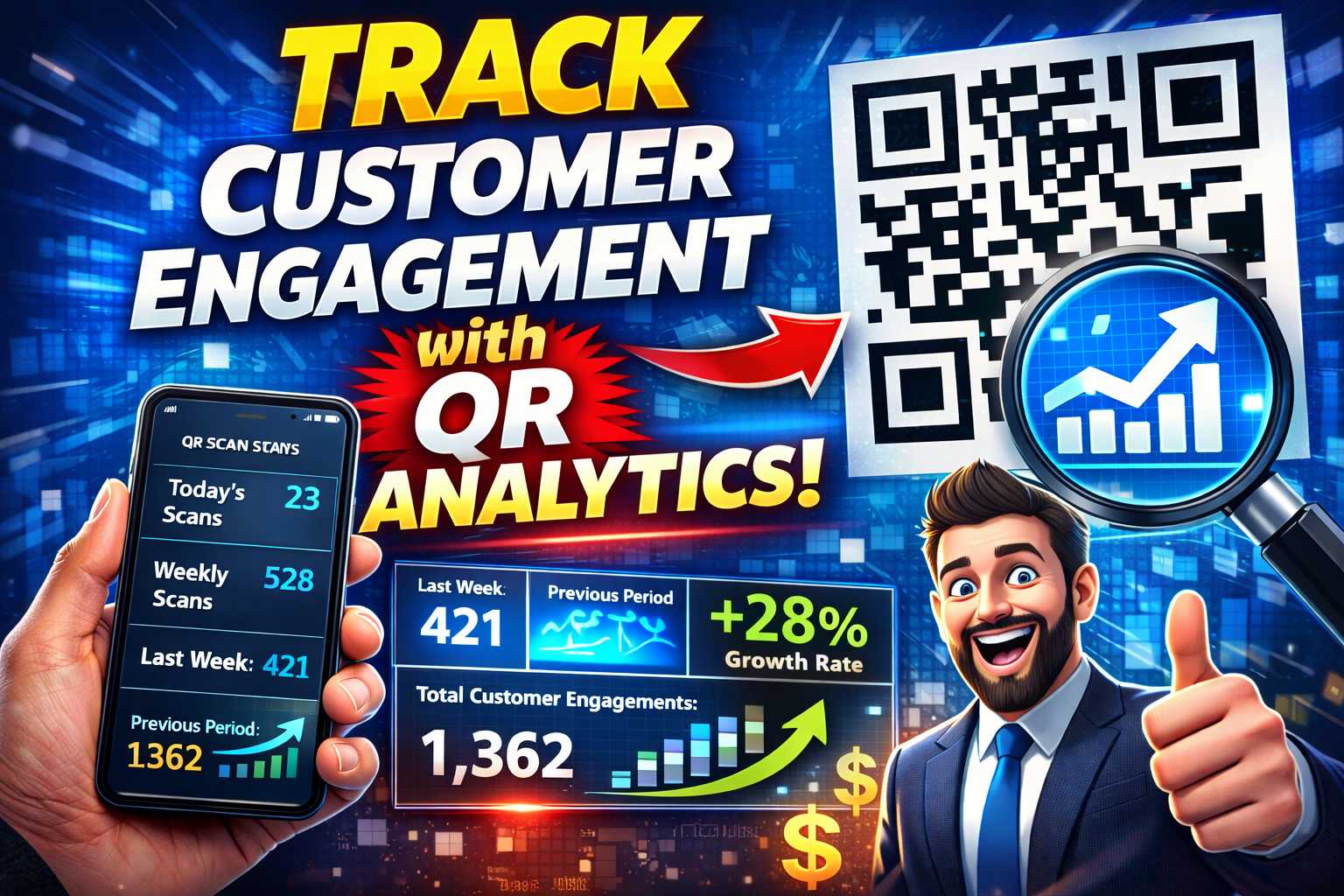
QR codes are no longer just a way to open websites. Today, they are powerful marketing tools that help businesses track customer engagement in real time.
If you’re using QR codes without analytics, you’re missing valuable data.
In this guide, you’ll learn:
What QR analytics is
What data you can track
How it improves marketing performance
How businesses use it to generate more leads
What Is QR Analytics?
QR analytics is the process of tracking and analysing data when someone scans your QR code.
Unlike static QR codes, smart QR systems provide insights such as:
Number of scans
Time of scan
Location of user
Device type
Repeat visitors
This data helps businesses understand customer behaviour.
Why QR Analytics Is Important for Businesses
Without tracking, you don’t know:
Which poster is working
Which location generates more leads
Whether your campaign is successful
With QR analytics, you can measure performance just like digital ads.
It turns offline marketing into measurable marketing.
What Can You Track Using QR Analytics?
Here are the most important engagement metrics:
1️⃣ Total Scan Count
Know how many people scanned your QR code.
This shows overall campaign reach.
2️⃣ Unique vs Repeat Scans
Understand:
New visitors
Returning visitors
This helps measure customer interest.
3️⃣ Scan Location
Track which city or area scans the most.
Useful for:
Multi-location businesses
Franchise owners
Exhibition tracking
4️⃣ Device Type
Know whether users scan from:
Android
iPhone
Desktop
This helps optimize user experience.
5️⃣ Time & Date of Scans
See peak engagement times.
Example:
If most scans happen between 6 PM–9 PM, you can schedule promotions during that time.
How QR Analytics Improves Customer Engagement
Here’s how smart businesses use QR tracking:
🎯 1. Improve Campaign Performance
Place different QR codes on:
Posters
Visiting cards
Shop counters
Packaging
Compare which one performs better.
📈 2. Increase Lead Conversion
If scans are high but inquiries are low:
You may need to:
Improve landing page
Add stronger call-to-action
Offer discount
Analytics shows the gap.
💡 3. Personalize Marketing
If a specific area shows high scans:
You can:
Run targeted ads
Offer location-based discounts
Focus local marketing efforts
Real Example: Shop Owner Using QR Analytics
A retail shop places QR codes:
On the counter
On carry bags
On a banner outside
After 30 days, analytics show:
Banner: 120 scans
Counter: 45 scans
Carry bag: 300 scans
Result:
Carry bag marketing works best.
Now they print more QR on packaging.
This is data-driven growth.
Static QR vs Dynamic QR (Important)
| Feature | Static QR | Dynamic QR |
|---|---|---|
| Editable Link | ❌ | ✅ |
| Scan Tracking | ❌ | ✅ |
| Analytics | ❌ | ✅ |
| Campaign Optimization | ❌ | ✅ |
If you want analytics, you must use dynamic QR codes.
How VCRDS Helps Track Customer Engagement
With VCRDS, businesses can:
✔ Track scan counts
✔ Monitor visitor analytics
✔ See engagement performance
✔ Use NFC + QR in one platform
✔ Collect leads from one QR
This turns a simple QR code into a lead generation system.
Best Ways to Use QR Analytics for Growth
Add QR on visiting cards
Add QR to Instagram bio
Add QR to product packaging
Use QR in exhibitions
Print QR on shop boards
Add QR to brochures
Use QR for Google reviews
Use QR for payment links
Track → Optimize → Scale.
Common Mistakes Businesses Make
❌ Using static QR codes
❌ Not checking analytics weekly
❌ Sending users to slow landing pages
❌ No clear call-to-action
❌ Not testing multiple QR placements
Final Thoughts
QR analytics transforms simple scans into valuable customer insights.
Instead of guessing what works, you can measure it.
In 2026, businesses that track engagement will grow faster than those who don’t.
If you are using QR codes for marketing, make sure you are using analytics too.

