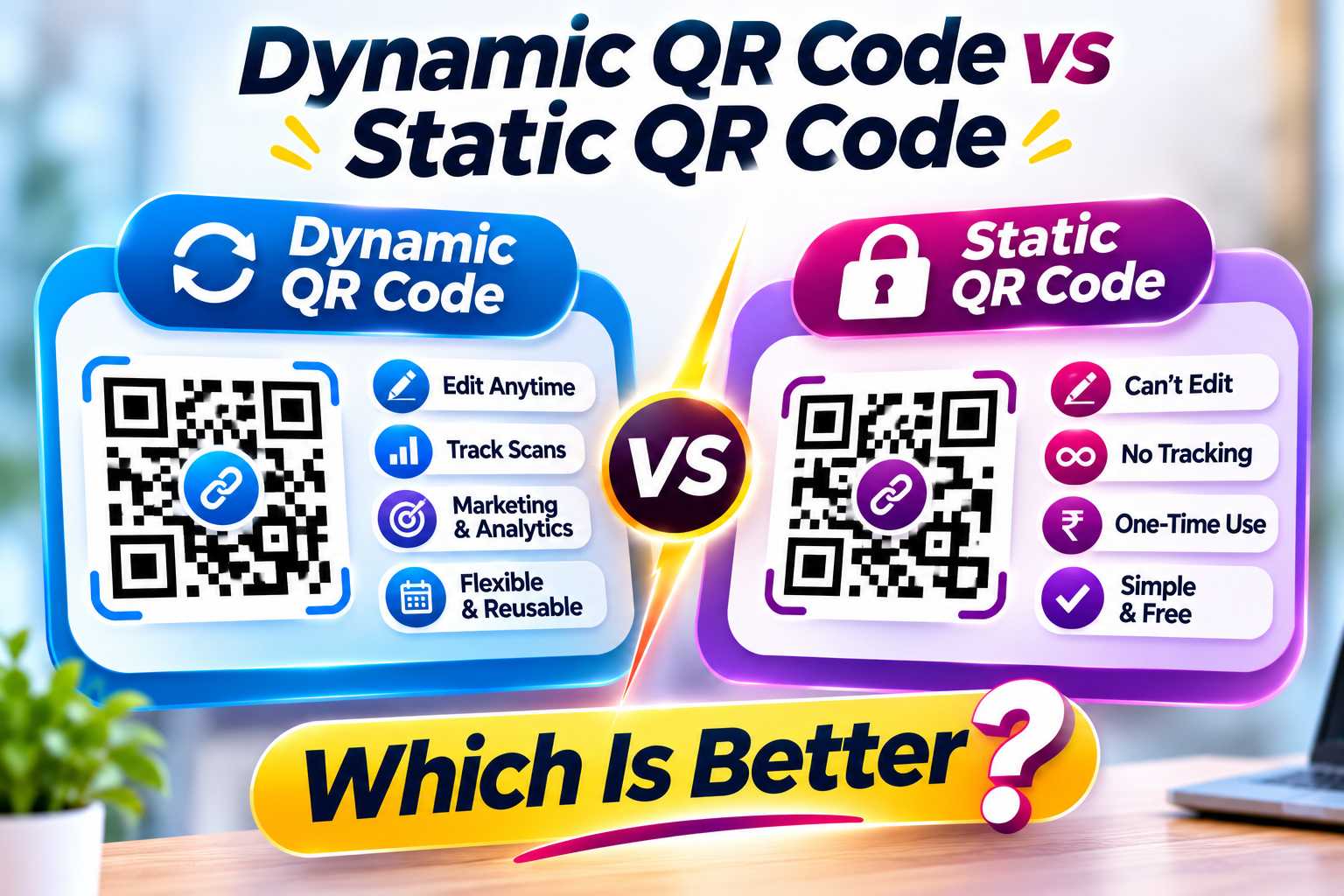
Dynamic QR codes and static QR codes may look similar, but they work differently. A static QR code usually contains fixed information that cannot be changed after generation, while a dynamic QR code generally uses a managed link that can redirect users to an updated destination without replacing the printed QR code.
For businesses, choosing between dynamic and static QR codes depends on how the code will be used. Static QR codes can be ideal for permanent websites, contact information and simple long-term uses. Dynamic QR codes are more suitable for marketing campaigns, editable business profiles, multi-link pages, tracking and frequently changing content. This guide explains the differences, advantages, limitations and best use cases of dynamic and static QR codes.
Dynamic QR Code vs Static QR Code: Which Is Better?
QR codes are commonly used to connect printed materials with websites, WhatsApp, digital business cards, product pages, contact information, Maps, social media and other digital destinations.
Although QR codes may appear visually similar, the way they store and manage information can be different.
The two common types are static QR codes and dynamic QR codes.
A static QR code normally stores the destination information directly inside the QR code. Once it is generated, the destination usually remains fixed.
A dynamic QR code generally points to a managed redirect link. The final destination can then be controlled through the QR platform, allowing businesses to update where the QR code leads without changing the printed code itself.
Static QR Code Explained Simply
A static QR code is best understood as a fixed QR code.
If you create a static QR code for your website, the website URL is encoded directly into the QR code.
For example, if the QR code contains your homepage URL, it will continue directing users to that same URL unless you generate a new QR code.
Points
Static QR codes can be used for:
Permanent website URLs
Phone numbers
Email addresses
Wi-Fi details
Plain text
Permanent Maps links
Contact information
Fixed downloadable files
Dynamic QR Code Explained Simply
A dynamic QR code normally contains a managed short URL rather than the final destination itself.
When a user scans the code, the managed link redirects them to another page.
Because the destination is managed separately, businesses can often change where the QR code leads without reprinting the physical code.
The Main Difference Is Editability
The biggest difference between static and dynamic QR codes is what happens after the QR code has already been created.
Static QR codes are generally fixed.
Dynamic QR codes are usually designed to allow destination changes, campaign management or additional tracking features through a QR management platform.
Static QR Codes Store Information Directly
When you generate a static QR code, the destination or information becomes part of the QR pattern itself.
For example, if you create a static QR code for:
https://example.com/services
that exact URL is stored in the QR code.
If you later want customers to visit a different page, the QR pattern itself cannot normally be edited. You would need to create a new code.
Advantages of Static QR Codes
Static QR codes are simple and can work well for permanent information.
Businesses do not always need advanced functionality, especially when the destination is unlikely to change.
Points
Advantages include:
Simple to create
Suitable for permanent URLs
No managed redirect required
Useful for fixed information
Can work without an ongoing QR subscription
Suitable for basic long-term applications
Limitations of Static QR Codes
The main limitation is the lack of flexibility.
If the encoded destination becomes outdated, businesses may need to replace the QR code everywhere it has been printed.
Points
Limitations include:
Destination cannot normally be changed
Printed materials may become outdated
Basic QR code itself does not provide scan analytics
Less flexible for campaigns
Not ideal for frequently changing information
A new QR code may be required when the URL changes
Dynamic QR Codes Use a Managed Link
A dynamic QR code generally points to a short URL controlled through a QR management platform.
The short URL then redirects visitors to the final destination.
Because the final destination is stored in the platform rather than permanently encoded into the QR pattern, it can often be changed later.
For example, the QR code may first open a product promotion page and later be updated to open a new campaign page.
The QR code printed on brochures or packaging can remain the same.
Advantages of Dynamic QR Codes
Dynamic QR codes provide additional flexibility for businesses that regularly update campaigns, contact information or marketing destinations.
Points
Dynamic QR solutions may provide:
Editable destination URLs
Scan analytics
Campaign tracking
Managed QR dashboard
Multi-link profiles
Editable digital business cards
Changing promotional destinations
Better long-term campaign flexibility
Limitations of Dynamic QR Codes
Dynamic QR codes normally depend on the QR service provider that manages the redirect.
If the service becomes unavailable, the subscription expires or the QR account is disabled, the code may no longer behave as expected.
Choose Static QR Codes for Permanent Information
Static QR codes are suitable when the destination is unlikely to change and the business does not need built-in QR analytics or advanced campaign management.
For simple and permanent applications, a static QR code can be enough.
Best Static QR Code Use Cases
Points
Static QR codes are suitable for:
Permanent company website
Stable portfolio URL
Wi-Fi credentials
Long-term email address
Permanent phone number
Fixed Google Maps location
Permanent information pages
Simple contact information
For example, if your QR code points to your main business domain and you expect that domain to remain permanent, a static QR code can be a practical choice.
The website content itself can still be updated without changing the domain encoded in the QR code.
Choose Dynamic QR Codes When Information May Change
Dynamic QR codes are useful when businesses need greater control after printing.
This is particularly important when QR codes are printed in large quantities or placed on materials that are expensive to replace.
If the destination changes later, the business may be able to update it through the QR management platform.
Best Dynamic QR Code Use Cases
Dynamic QR codes can be useful for:
Marketing campaigns
Promotional posters
Product packaging
Digital business cards
Multi-link profiles
Product launches
Event registrations
Lead-generation campaigns
Seasonal offers
Restaurant campaigns
Editable contact pages
Frequently updated business information
Useful for Long-Term Printed Marketing
Imagine printing thousands of brochures with a QR code for a promotional page.
If the page changes later, a static QR code could make those brochures outdated.
With a dynamic setup, the business may be able to update the destination while continuing to use the same printed materials.
Static and Dynamic QR Codes Can Both Work
The right option depends on what you want your business card QR code to do.
If the QR code points to a permanent website address, a static QR code may be enough.
However, if the QR code opens a digital business card containing phone numbers, WhatsApp, social media, Maps and other changing information, an editable profile may be more useful.
Dynamic QR Codes for Digital Business Cards
Business information can change over time.
Your phone number, designation, website, Instagram account or business location may eventually be updated.
A dynamic QR code or editable profile-based QR setup can allow the printed card to continue working while the information behind it is updated.
A digital business card can include:
Phone
WhatsApp
Email
Website
Instagram
Facebook
LinkedIn
Google Maps
Products
Services
Portfolio
Appointment booking
Dynamic QR Codes Offer More Campaign Flexibility
Marketing campaigns often change over time.
A business may promote one offer today and another product next month.
Dynamic QR codes can make campaign management easier because the destination can often be updated without creating a new printed code.
Track QR Code Campaign Performance
Many dynamic QR platforms provide analytics that help businesses understand how customers interact with their printed marketing.
Depending on the platform and privacy settings, businesses may be able to measure different types of campaign activity.
Points
Possible metrics include:
Number of scans
Scan date and time
General device information
Approximate location where permitted
Campaign source
Page visits
Link interactions
Conversion actions
Use the Same QR Code Across Campaign Stages
A business could initially direct customers to a product launch and later update the QR destination to a product catalogue or enquiry page.
This can make the same printed QR code useful across different phases of a marketing campaign.
Use a Multi-Link Profile for Several Destinations
Businesses often want one QR code to provide access to WhatsApp, websites, Instagram, Facebook, Maps and other platforms.
In this situation, the QR code can open a central multi-link page or digital business profile.
Both static and dynamic QR codes can technically point to a multi-link webpage.
The important difference is whether the destination or underlying profile can be changed later.
Editable Multi-Link Profiles Provide More Flexibility
A business may change an Instagram username, website page or WhatsApp number without wanting to replace every printed QR code.
An editable digital business profile allows these individual links to be managed from one central location.
This can be particularly useful for small businesses and professionals who frequently update their digital information.
Use Editable QR Codes for Changing Lead Campaigns
Lead-generation campaigns can benefit from dynamic QR technology because businesses may want to change destinations or compare different campaign results.
A QR code could initially direct customers to a WhatsApp enquiry and later be changed to a booking page or lead form.
The ability to update the destination can make long-term lead campaigns more flexible.
Track Meaningful Customer Actions
QR scan numbers alone do not always show campaign success.
Businesses should also monitor actions such as:
WhatsApp enquiries
Form submissions
Phone calls
Appointment requests
Product enquiries
Website conversions
A dynamic QR platform may provide useful scan information, while destination analytics can provide additional conversion data.
Consider Both Initial and Long-Term Costs
Static QR codes can be inexpensive because they do not necessarily require an ongoing QR management service.
For permanent destinations, this can make them a cost-effective choice.
Dynamic QR codes may involve platform fees, but they can potentially reduce reprinting costs when campaigns or URLs change.
Think About Reprinting Costs
The true cost is not only the QR code itself.
If a static QR code becomes outdated after being printed on thousands of brochures, product packages or cards, replacing those materials can be expensive.
A dynamic QR code may cost more to manage but provide greater flexibility for changing campaigns.
Businesses should compare the long-term printing and management costs before deciding.
Understand the Provider's Features and Terms
Dynamic QR codes depend on the platform that manages the redirect.
Before using a dynamic QR code for long-term printed materials, review how the service works and what happens if your plan expires.
Points
Check:
Whether destination editing is supported
Whether QR analytics are included
Subscription requirements
QR code expiry policy
Link continuity after plan cancellation
Export quality
Number of editable QR codes
Multi-link profile support
Data privacy options
Account management features
Avoid Dependence on an Unknown Service
If a QR code is being printed on long-term materials, choose a service you are comfortable relying on.
If the provider's redirect stops functioning, the printed QR code may no longer reach the intended page.
This is one of the biggest differences between using a dynamic redirect and a static QR code that points directly to your own permanent URL.
Plan for the Future Before Printing
Businesses often create a QR code based only on their current requirement.
Before printing, consider whether the destination may change in the future.
Points
Avoid:
Using a static QR code for a temporary campaign URL
Paying for dynamic features you do not need
Printing without testing
Using outdated destinations
Forgetting dynamic subscription requirements
Using a non-mobile-friendly landing page
Making the QR code too small
Using poor contrast
Failing to maintain the destination page
Choosing a platform without reviewing its policies
Always Test the Final Printed QR Code
Whether static or dynamic, the physical QR code still needs to scan correctly.
Test the final printed size using multiple smartphones where possible.
Confirm that the destination loads properly and that important buttons, links and customer actions work correctly.
Use QR Codes as a Bridge to Useful Digital Content
QR codes themselves are mainly access tools. Their SEO, AEO and GEO value comes from the digital content they connect customers to.
Businesses should make sure the destination contains accurate information, useful content and clear customer actions.
AEO-Friendly QR Destinations
After scanning, customers should quickly find answers to common questions such as:
What does this business offer?
How can I contact them?
Is WhatsApp available?
What is the official website?
Where is the business located?
What services are available?
How can I request a quote?
Clear headings and direct buttons make the information easier to understand.
GEO-Friendly Local Business Information
Local businesses should include accurate geographic information such as their business address, service area and Maps link.
Stores, restaurants, salons, hotels, clinics and local service businesses can use QR codes to make these location details easier for customers to access.
Geographic information should accurately describe the business rather than adding unrelated locations simply for keyword targeting.
Choose Based on Your Business Requirement
There is no single QR code type that is best for every situation.
Static QR codes are useful when the destination is permanent and you want a simple direct connection.
Dynamic QR codes are useful when you need editable destinations, campaign flexibility or scan analytics.
Choose a Static QR Code if:
Your destination is permanent
Your URL is unlikely to change
You do not need QR scan analytics
You want a direct link
You want less dependence on an external redirect provider
Choose a Dynamic QR Code if:
Your destination may change
You want scan analytics
You run marketing campaigns
You need an editable QR destination
You print QR codes in large quantities
You use changing promotional pages
You want greater campaign flexibility
Dynamic Is More Flexible, but Static Is Still Useful
Dynamic QR codes offer more control, but that does not mean every business should automatically use them.
For permanent websites and simple information, static QR codes can remain effective for years.
For changing campaigns, digital business cards and editable business profiles, dynamic QR codes may provide a more practical solution.